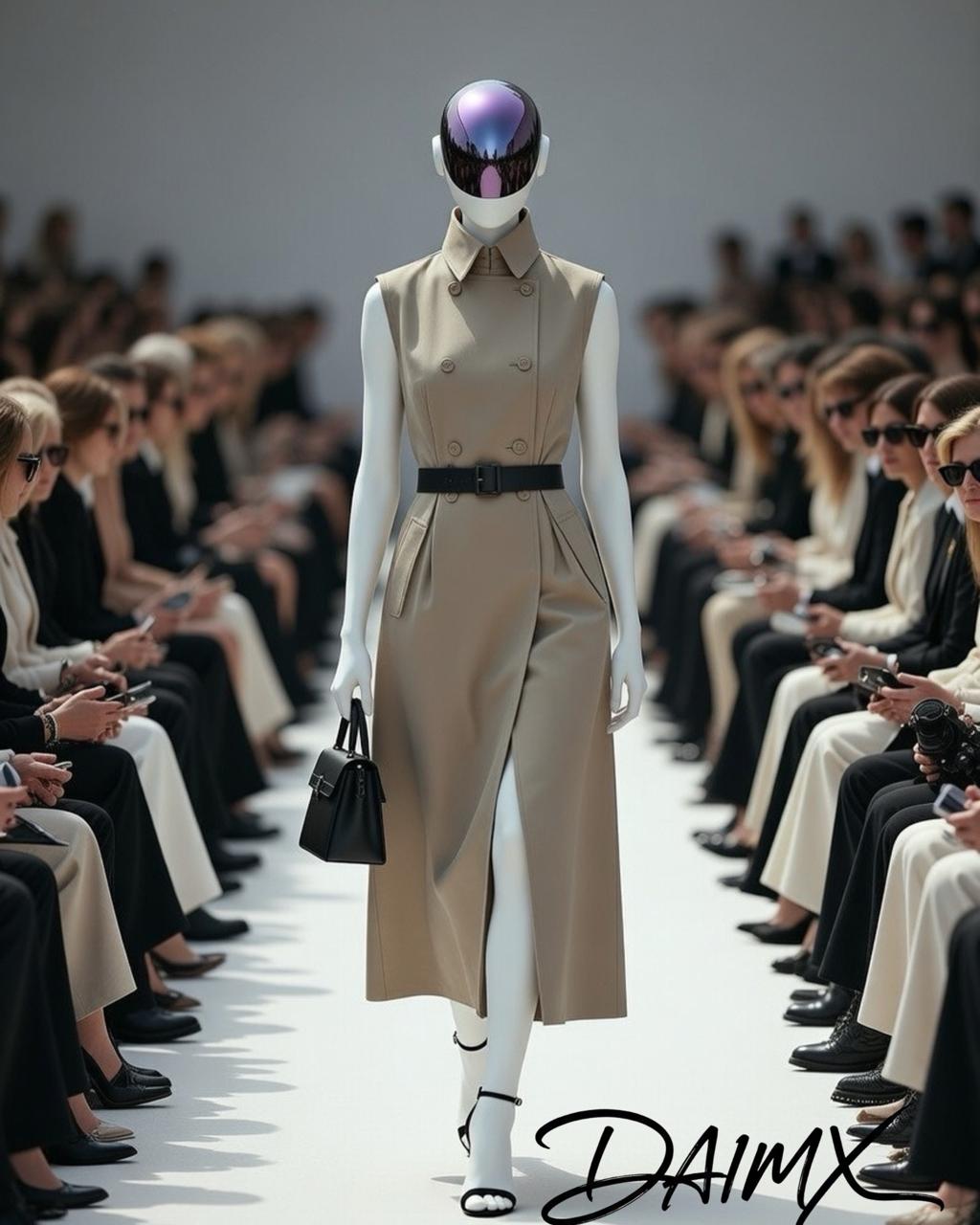
Discover Our Journey So Far
How a WBS exam project became a vision for the future of personalized scents and 3D perfume bottles
Sometimes the best ideas don’t start with a business plan. Sometimes they start with a school assignment. That is exactly what happened during my WBS exam project. The brief sounded simple: develop a product concept, create a visual identity, and build a marketing strategy around it.
Most students choose an existing product. I didn’t. I wanted to challenge myself—and artificial intelligence.
What started as an exam project slowly grew into something much bigger. Not because I wanted to launch a traditional new perfume brand, but because I began asking myself a completely different question: Can AI help create a fragrance and a bottle that truly belong to just one individual?
That question didn’t come out of nowhere. Fragrance has fascinated me for years. Looking at my own life experiences and personal journey allowed me to apply real-world context to this project, leading to a fascinating analysis and outcome.
The Concept
There are roughly three types of people in the world of perfume and artificial intelligence:
The first type mainly tries to impress with big buzzwords.
The second possesses true craftsmanship and understands that a great scent begins with the person wearing it.
The third uses technology to explore new possibilities, knowing that data alone will never be enough.
The “Scent Creator” Who Just Wanted to Impress
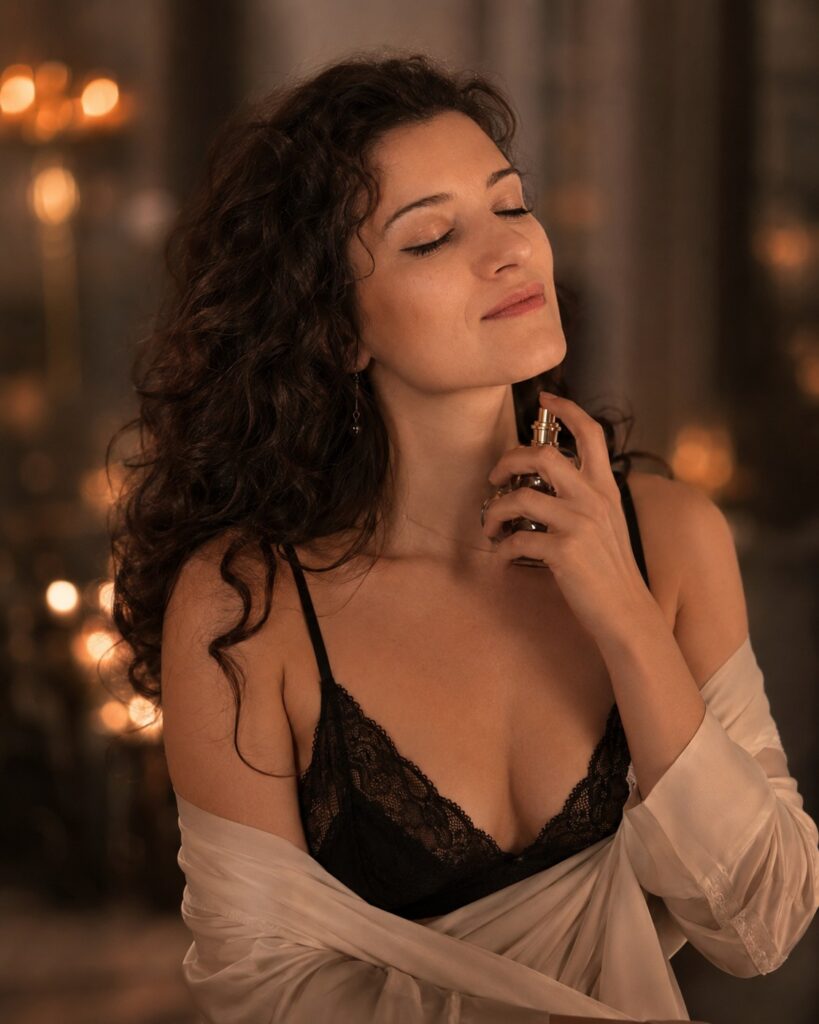
I remember dating someone once. This Guy showed up with a perfume he was absolutely convinced would be perfect for me. He knew exactly what scent I needed or so he thought.
What he forgot was that over the years, I had developed my own signature perfume style. Not just based on what I liked the smell of, but by discovering how different perfumes actually developed on my skin.
A perfume never smells the same on everyone. Skin temperature, moisture levels, sebum production, and the body’s natural chemistry all influence how a fragrance unfolds.
This self-proclaimed scent creator was mostly trying to impress me with a convincing story. I played along nicely after all, it was a sweet gesture. But a nice story doesn’t make someone a Master Perfumer.
Who Is Leading the Charge?
The True Master Perfumer
True master perfumers don’t start with a bottle; they start with the person.
They analyze what fragrances someone already wears, which ingredients recur in those preferences, and how a scent develops on their skin. Only then do they begin blending fragrance notes.
There are famous examples of this craft in Dubai, such as Yusuf Bhai in Deira, The Perfume Bar in The Dubai Mall, and specialized perfume houses that compose bespoke fragrances.
Years ago, during an earlier visit to Dubai, I was wearing Armani Code. With the help of a perfume specialist, I developed a scent that leaned more toward Dior Poison! That experience led me to wear Dior Poison later on a combination that suited me surprisingly well, and honestly, still does!
During a trip to Turkey, I also visited a perfume specialist (at houses like Atelier Rebul and Nishane) who didn’t just sell an off-the-shelf fragrance. Instead, they first listened to my preferences and guided me through experiencing different scent combinations. I still need to look up the exact name of that specific specialist, but the experience reaffirmed just how deeply personal fragrance truly is.
A bespoke scent like that is extraordinary, but usually quite expensive. And what happens when you also want a lighter scent for working out, a summer fragrance for vacation, or a different perfume for a special occasion?
Most people end up back at Le Parfum Boutique or Douglas , ICI Paris XL or another high street perfumery, testing various scents on paper strips and hoping to strike gold.
But what if artificial intelligence could make that process more personal, faster, and far more accessible?
From Prompt to Perfume
Perfume has never been just a product. It is chemistry, emotion, and memory captured in a formula.
What AI makes possible today is something fundamentally new: translating a feeling into data, and then translating that data into a scent.
During my studies at WBS, I was assigned to develop a design and marketing concept for an exam. Using AI, I designed a perfume bottle shaped like an infinity sign, combined with the DAIMX logo.
Throughout that process, I didn’t just explore how prompting works; I focused on why structure makes the difference between coincidence and control.
I shifted from random, unstructured prompts to systematic creative direction an approach where subject, shape, material, lighting, positioning, and visual identity are intentionally defined.
Then a new question emerged: What if we use this same systematic approach to design not just images, but fragrances?
The Anatomy of a Scent
A good perfume formula looks surprisingly similar to a well-crafted prompt. Every classic fragrance is built on three distinct layers:
Top Notes The First Impression:
These are the scents you notice immediately upon application. They are typically fresh and volatile.
Examples: Citrus, bergamot, light florals, fresh herbs.
Heart Notes — The Character:
As the top notes fade, the heart of the fragrance emerges. This forms the signature identity of the perfume.
Examples: Rose, jasmine, lavender, spices, aromatic herbs.
Base Notes — The Soul:
Base notes linger the longest. They determine the depth, warmth, and lasting memory a scent leaves behind.
Examples: Woods, amber, musk, vanilla, resins.
The pattern is clear:
A poor prompt produces chaos.
A poorly structured scent feels out of balance.
Structure doesn’t restrict creativity; structure makes creativity controllable. Both prompting and perfume design come down to the exact same question: What experience do I want to create, and what layers are needed to build it?
Who Is Leading the Charge?
The world of AI and fragrance is currently split into two camps:
The Technology Builders: Companies working with chemistry, molecular data, perfume formulas, and years of R&D.
The Presentation Builders: AI creators generating attractive images, slapping the word luxury on them, and acting as if a complete product already exists.
Let’s look at the actual innovators:
1. Givaudan – Carto
Givaudan is one of the world’s largest and most influential fragrance and flavor manufacturers. They developed Carto: a digital system designed to assist perfumers in formulating and tweaking scents. Through a visual interface, the perfumer can select ingredients, adjust ratios, and test different combinations. An automated dosing system can then rapidly produce a physical sample. This allows perfumers to test significantly more variations in less time. Carto doesn’t replace the perfumer; it speeds up access to formulas, ingredient knowledge, and experimentation. Yann Vasnier, Fine Fragrance Perfumer at Givaudan, described Carto as a futuristic addition to an age-old craft.
2. Symrise & IBM – Philyra
Symrise partnered with IBM Research to create Philyra, an AI system named after the Greek mythological figure associated with perfume and healing. Philyra analyzes millions of formulas and approximately 1,500 raw materials, looking at ingredient pairings, target audience popularity, performance, complexity, and unexplored combinations. Because Philyra lacks the intuitive bias of a human perfumer, it can discover unexpected patterns a human might never consider. Pierre Gueros, Senior Fine Fragrance Perfumer at Symrise, emphasized that Philyra was designed not as a replacement, but as a tool to amplify creativity.
3. DSM-Firmenich Scentmate
Scentmate is an AI-enabled platform that guides brands through selecting and developing fragrances. Clients input their brand identity, target audience, desired scent profile, and product category. The system streamlines the workflow from briefing and selection to sampling and ordering, making fragrance development accessible to smaller brands without in-house perfume departments.
4. IFF Scentrition
International Flavors & Fragrances (IFF) combines decades of sensory research with machine learning. Tools like Scentrition analyze consumer behavior, scent preferences, and formula performance to better predict how different demographics will react to a scent.
The “AI Artist” Without a Compass
Not everyone using AI is actually innovating. Beautiful concept renders of futuristic bottles and “personalized scents” are everywhere. Visually, they look stunning, but behind the image, critical elements are missing: working formulas, ingredient safety, regulatory compliance, skin testing, production capacity, and a real business model.
A pretty render is not a product. And a well-worded prompt is not a perfume lab.
EveryHuman: A Bridge to Reality
ScenTronix (known for its consumer concept EveryHuman) represents an intriguing bridge between digital personalization and physical production. Customers answer questions about personality, lifestyle, and memories. An algorithm translates those answers into a scent profile, and a custom device blends the physical perfume on the spot.
Yet, a fundamental limitation remains: the machine can calculate, but it cannot smell. An algorithm knows what ingredients match statistically, but it cannot feel whether a scent is elegant, moving, or repulsive. Human evaluation remains essential.
AI can compute a fragrance. Humans determine if it has meaning.
The Bottle: Artwork or Product?
Fragrance packaging tells as much of a story as the scent inside. An iconic bottle is often just as recognizable as its fragrance.
3D printing is opening up a completely new realm, allowing designers to create complex geometries that traditional manufacturing cannot achieve:
Lenticular Perfume: Illusory Material collaborated with Stratasys to create a 3D-printed luxury package using computational design. Depending on the viewing angle, colors and visual patterns shift, giving the impression of constant movement.
Nseen: Developed by MIT researchers Jiani Zeng and Honghao Deng, this transparent 3D-printed bottle reveals its branding only when viewed from a specific angle. The bottle, optical structure, and hidden text are printed as a single integrated piece.
While these prototypes are currently made from high-grade resins, the next logical step is clear: customized, digitally designed glass bottles.
Why should every bottle look identical if the scent inside is entirely unique? True personalization shouldn’t stop at the formula.
DAIMX: Not a Perfume Brand, but an Intelligent System
Could DAIMX become a traditional perfume brand with a static collection on a store shelf? It could, but that isn’t the most exciting model.
DAIMX functions best as a creative system for personalized scent experiences.
The brand identity translates as:
D — Diana
A — Artificial
I — Intelligence
M — Mode
X — Infinity (representing endless possibilities and combinations)
Instead of starting with “Which perfume do you want to buy?”, DAIMX starts with a question: Who are you?
How the System Works:
The Human (Input): You share your story, favorite notes, memories, skin traits, lifestyle, and desired emotions.
AI Analysis: AI translates this data into a preliminary scent profile, ingredient ratios, and structural balance.
Master Perfumer Refinement: A human perfumer reviews the output, refining the digital recommendation into a safe, wearable, elegant formula.
Creative Identity Generation: AI designs the bottle shape, packaging, campaign visuals, storytelling, and digital branding tailored specifically to that identity.
The Final Product: A bespoke fragrance housed in a bottle design that exists nowhere else in the world.
The Future of Personalized Fragrance
We are moving toward a world where fragrance is no longer just selected off a shelf. In the future, a scent will be composed based on who you are, how you feel, where you are going, and the memories you want to evoke.
Instead of wearing one signature scent, people may curate personal scent wardrobes:
A scent for focus at work.
A scent for high-energy sports.
A scent for travel.
A scent tied to a specific core memory.
Technology makes this level of personalization possible. But technology alone doesn’t create meaning. Meaning is created by the human who connects an emotion to a scent.
Final Thought
You cannot see a fragrance. Yet, a scent can transform a room, unlock a forgotten memory, and transport you back in time within seconds—just like a picture, a song, or a story.
AI doesn’t automatically make technology more human. But it forces us to articulate more precisely what we feel, what we remember, and what we want to express.
The future of perfume isn’t artificial.
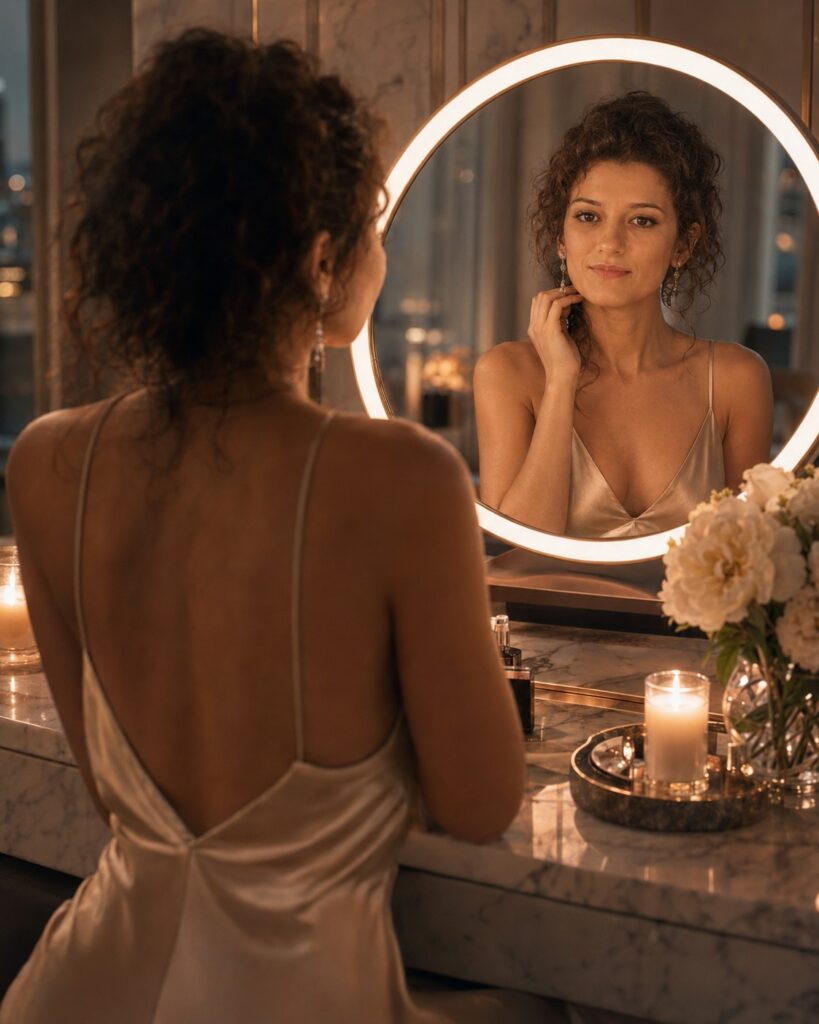
by the human who connects an emotion to a scent.
Final Thought
Final Thought
You cannot see a fragrance. Yet, a scent can transform a room, unlock a forgotten memory, and transport you back in time within seconds—just like a picture, a song, or a story.
AI doesn’t automatically make technology more human. But it forces us to articulate more precisely what we feel, what we remember, and what we want to express.
The future of perfume isn’t artificial. The future of perfume is personal.
AI won’t replace the perfumer. It gives the perfumer a new lens to understand humanity better.
Related Posts
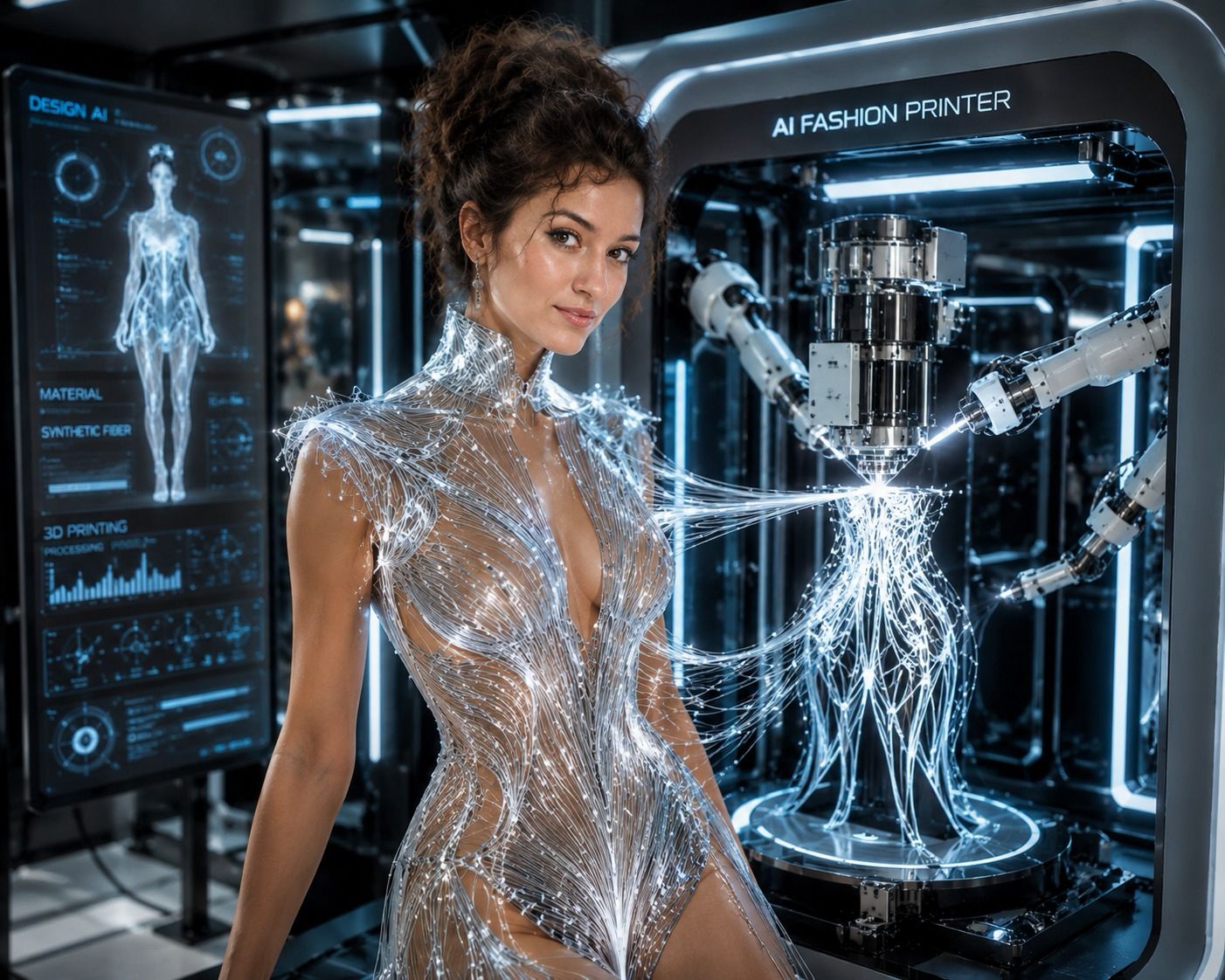 Future Couture Isn’t Just Generated, It’s Engineered